Home Origin Deep Dive Programs Watch & Read Interact Join the Movement
The Origin

By Karanbir Singh, creator and champion of the Satisfaction Economy framework

It didn't start as an economic theory.

It started with a question that wouldn't leave: why does this feeling stay, no matter what I fix?

Before there was a framework, there was a person dealing with something much harder to name — physical, mental, emotional, and relational pain, all tangled together in a way that resisted every attempt to resolve it individually.

What became clear, eventually, was this: the dissonance wasn't going to leave by treating its symptoms. It was going to stay — quietly, persistently — until something at the root was actually addressed. And when the root was traced back far enough, past the personal and the relational and even the emotional, it led somewhere unexpected: to the socioeconomic system itself. Specifically, to the money and ownership-based economic monopoly that every one of us is born into, without ever being asked.

That realization changed the direction of the work entirely. Not "how do I feel better within this system," but "what would it actually mean to deconstruct this system, and build its opposite?"

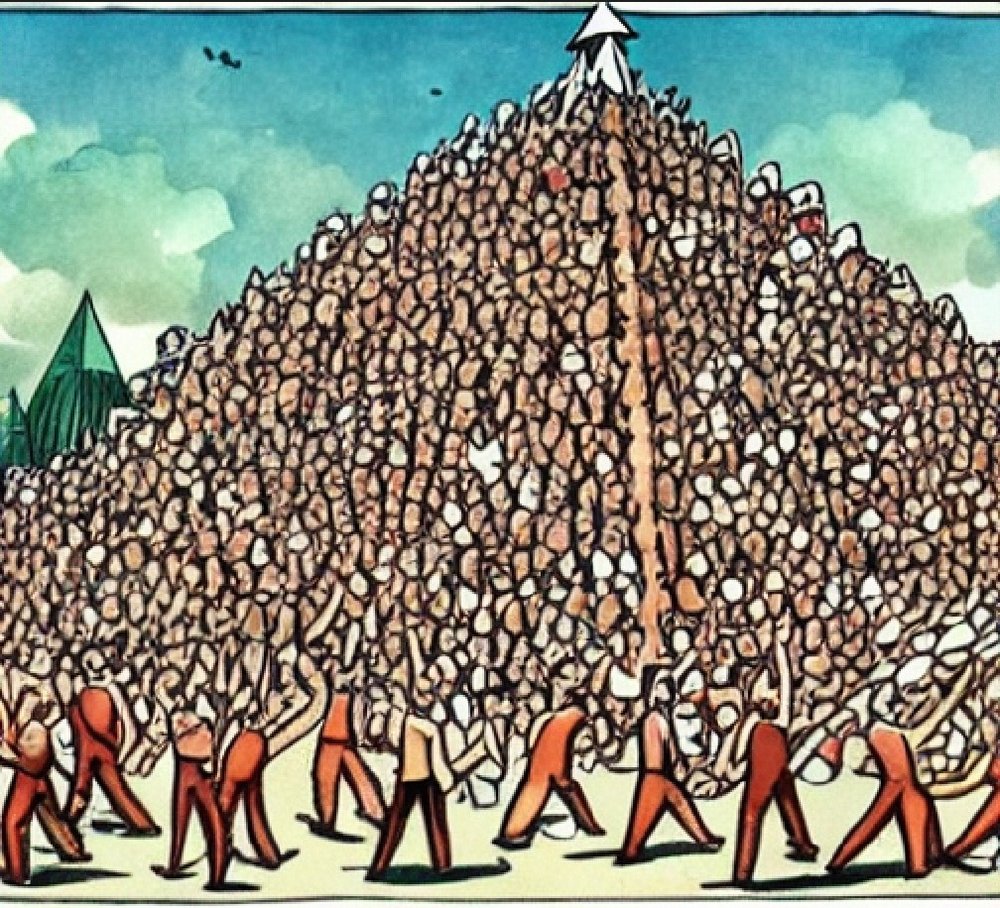
How It Was Built

Five whys. Five hows. One framework.

In 2012, that question became a method. Five whys, asked in sequence, to get underneath the surface of the problem to its actual root. And then five hows, asked just as rigorously, to construct something genuinely different in its place — not a modification of the existing system, but its deliberate opposite.

What emerged from that exercise is what's now called the Satisfaction Economy: a parallel, voluntary system where satisfaction — real impact on yourself, others, and the environment — replaces money and ownership as the measure of value.

OUR CURRENT PARADIGM
Profit Maximisation,
Unsustainable, Atomistic
Current Socioeconomic
System
Unhealthy, Divisive Competition
Centralized,
Low Autonomy
Money-Based
System
A 5 Why Exercise

Humans are destroying Earth by living unsustainably

FLIP IT:

Humans are replenishing Earth by living sustainably

A choice to live outside the money system as a means to reduce harmful human impact — personal, local, global, and beyond

SELF-GOVERNANCE
(each to achieve and maintain ability to govern self)
A SATISFACTION-BASED SYSTEM
(non-money based, satisfaction-based value instead)
TRUST-BASED SYSTEM
(manifest & spread through shared knowledge and experiences)
SATISFACTION ECONOMY
ADDRESS PERTINENT ISSUES
(global, local, personal)
The Long Road

A decade of mostly being unheard

For years, there was no real audience for this idea — and the reason was almost always the same.

2012
The framework is built
The five-why, five-how exercise produces the core structure of the Satisfaction Economy — a parallel economy where satisfaction, not money, is the unit of value.
The Years That Followed
No audience, and one persistent misunderstanding
Adults, almost universally, weren't open to even hearing the idea out. The most common assumption was that barter was the only conceivable alternative to money — and once that assumption took hold, the actual framework never got a fair hearing. Explaining the difference, again and again, to rooms that had already decided the conversation was pointless, became its own kind of work.
More Recently
The audience starts to grow
Slowly — not all at once — the idea has started to find people willing to actually sit with it. Presentations at the Learning Planet Festival, organised by UNESCO and the Learning Planet Institute. Conversations with government bodies in India. A small but real community of people signing the petition, joining the movement, asking better questions than "isn't this just barter."
Now
Not radical. Just early.
Over a decade later, the idea that genuine economic choice should exist is slowly losing its "radical" label. It's not that the argument changed. It's that more people are ready to hear it — because more people are feeling, in their own lives, the exact root cause this framework was built to address.
Where This Leaves Us

The dissonance was never the problem. It was the signal.

What started as a personal search for relief became a framework for something much larger — not because the personal pain was resolved by building a new economic theory, but because tracing it honestly, all the way to its root, revealed something true about the system everyone lives inside. That's the origin. Everything else — the videos, the book, the presentations, the movement — is what happened after.

Join the Movement