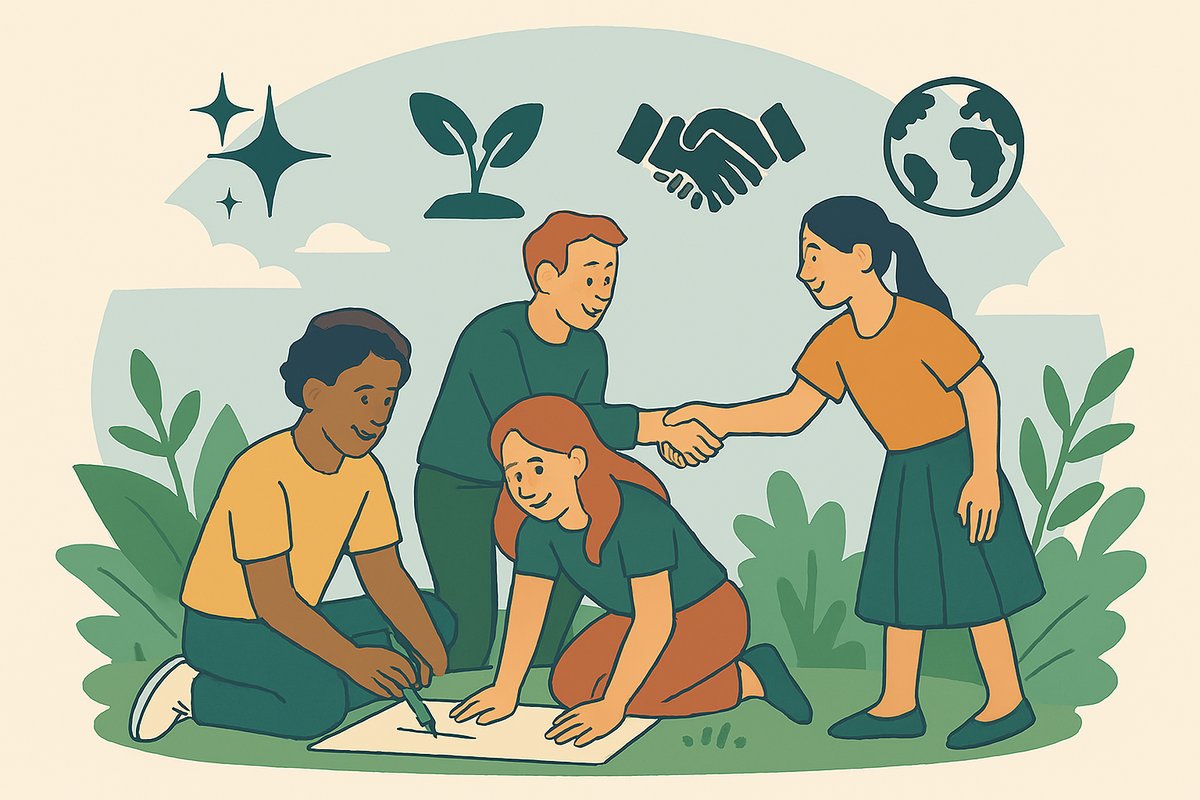
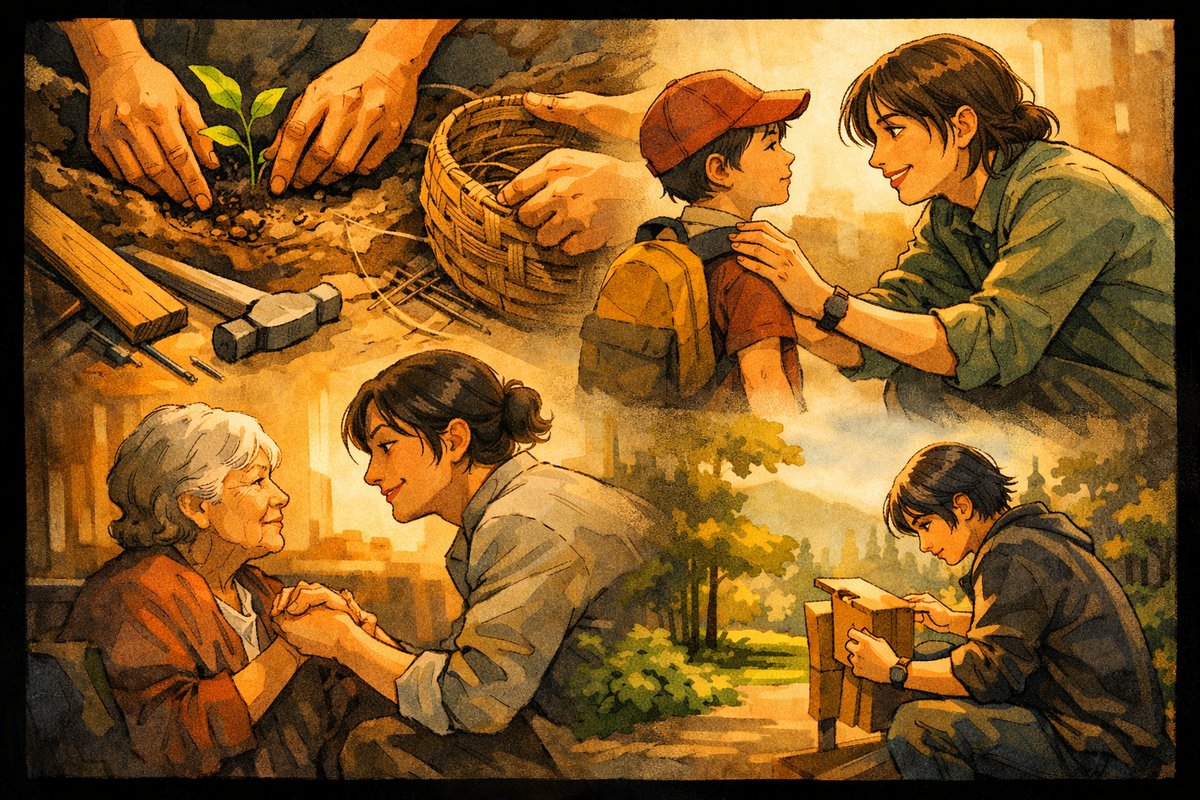
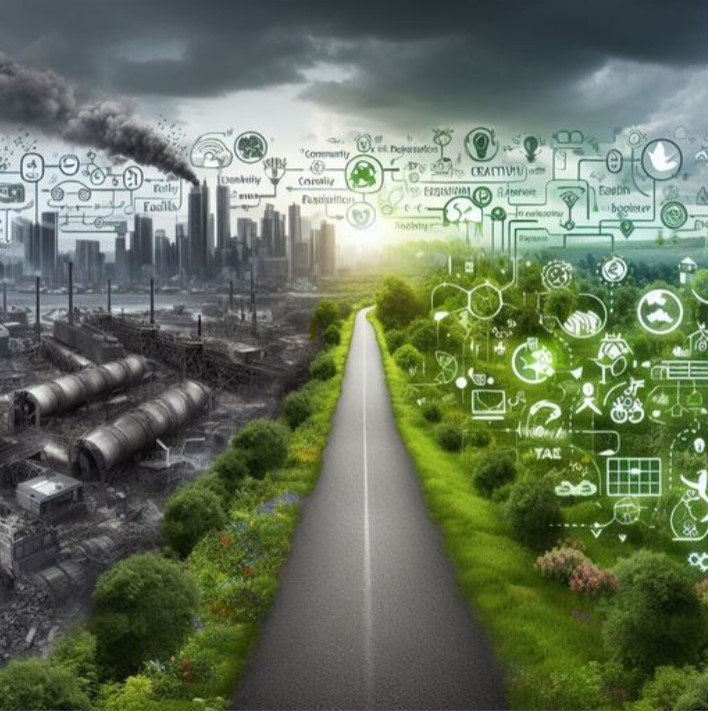
Picture an economy where empathy outweighs narcissism, sustainability outweighs exploitation, and healing outweighs harm. Not a utopia — a working framework. The Satisfaction Economy is the symbiotic opposite of the system we have today, and it's already here for anyone ready to step in.
The Satisfaction Economy isn't a variation on the current system — it's built as its mirror image. Where the current system rewards one thing, this one restores its opposite.
Decisions run on purpose and trust instead of on what can be extracted.
Your real impact on other people counts as value, not just your gain.
The environment is a stakeholder in every exchange, not a cost to externalise.
Success is measured by wellbeing restored, not just output produced.
A parallel, voluntary economic framework where satisfaction — your real impact on yourself, the people around you, and the environment — is the unit of value. Not a replacement for money. Something that runs alongside it, for anyone who chooses to step in.
These aren't steps to follow in order — they're four parts of one framework, each depending on the others. Click any one to go deeper.
Not theory. An actual day — waking up, contributing, connecting — inside an economy where your real impact is what counts.
And this is only the beginning. We're building a game — a genuine, playable prototype of this economy — so you can feel what participating actually feels like, not just imagine it. Early access goes to the people who join the movement below.
You didn't choose the money and ownership economy. Your parents didn't. Nobody in the history of the species has ever been offered a genuine alternative to it. It simply was — the water everyone swims in, so total it stopped looking like a choice at all. Society was meant to define economy. Instead, economy has quietly come to define society, and we've accepted that as the natural order of things.
That's what makes this choice matter, even though it isn't the crux of the Satisfaction Economy. SE doesn't need you to reject the current system to be real — it can stand on its own, as a parallel or eventual replacement, difficult as that would be to achieve. But being able to choose, at all, is what finally frees us from an enslavement most of us have simply stopped noticing.
One option. No say in the rules. Value measured only in what can be bought, sold, or owned. Care work, ecological restoration, and community contribution — largely invisible.
A second option, running alongside the first. Value measured by your real impact — on yourself, on others, on the environment. Voluntary. Yours to enter, at your pace.
That's the most common response. It deserves evidence, not just conviction.
Three things have converged that didn't exist before. We can measure satisfaction now, in ways we never could — through self-reporting, community feedback, and behavioural data. The legitimacy of the existing system is visibly fracturing — in its ability to address inequality, ecological collapse, and a widespread crisis of meaning. And the infrastructure for an alternative — legal, technological, and community-based — is already being built.
Every day the current system continues unchallenged is another day the same root cause keeps producing the same harm — quietly, at scale, to people who never agreed to any of it. The Satisfaction Economy has been presented at the Learning Planet Festival — organised by UNESCO and the Learning Planet Institute — and is in active, ongoing dialogue with government bodies in India on how satisfaction-based wellbeing measures could inform public policy.
That conversation continues, deliberately, toward a Public Interest Litigation before India's Supreme Court — establishing genuine economic choice as a matter of constitutional right, not a favour granted, but a freedom finally recognised.
Facilitated sessions that turn the framework into something practical — for corporates, for schools, and for the next generation of changemakers.
Explore the ProgramsIt started with one person asking why an unhealthy dissonance wouldn't leave — until they traced it back to its root. That story is on the Origin page, if you want the fuller version.
Read the Origin StoryEvery economy in history was something people were born into. This is the first one anyone gets to actually join. Preregister now, and you become one of the first people building it alongside us — with early access to the prototype game, updates as the framework grows, and a founding member number that marks the moment you decided not to wait any longer.